
The Holiday-Ready Pantry: Organize It Now, Cook in Peace Later
The calmest holiday kitchens we walk into were sorted in September, not December. Here is how we audit, zone, and label a pantry so the busy season starts with a deep breath instead of a scramble.
Every November we get the same call. Someone has opened the pantry to start the Thanksgiving grocery list and found a few half-used bags of brown sugar, baking powder that expired last spring, and no idea whether there is enough flour for pie crust. The holidays do not create pantry problems so much as reveal them. That is why, in our own homes and with our clients, we do the pantry in late September, while the calendar is quiet. A few focused hours now buy weeks of calm cooking later.
Empty It All Before You Buy a Single Basket
The audit is the step everyone wants to skip and the one that makes everything else work, so we begin as we do in any closet: every single item comes out onto the counter. Check the dates, and be honest about what is technically fine but has gone untouched for a year. Group the duplicates as you go, because seeing several open jars of cinnamon side by side is the fastest cure for buying another. Anything unopened and still in date that your family will not eat can go to a local food drive.
While the shelves are bare, wipe them down with the same gentle, non-toxic approach we bring to every wellness cleaning visit, because residue from a harsh spray has no business sitting under the cereal. Let the shelves dry fully before anything goes back, especially in a Georgia September, when the humidity has not quite let go.
Build Zones Around How Your Family Actually Cooks
A pantry stays organized for the same reason a closet does: the system follows real routines instead of a picture from a magazine. In most homes we work in, that means a breakfast zone within easy reach: cereal, oats, coffee, whatever the school mornings depend on. Baking gets its own shelf, and for the next few months a generous one, with flours, sugars, leaveners, chocolate, and spices within one arm's reach so a pie does not begin with a scavenger hunt. Weeknight staples live at eye level: pasta, rice, canned tomatoes, broth, the beans and oils you cook with without thinking.
Then there is the zone that changes a household more than any other: the kids' snacks, placed low, at their height, in a basket they can pull out themselves. When children can see and reach what they are allowed to have, the after-school negotiation mostly disappears, and so do the torn-open boxes on the top shelf. This kind of zoning is the heart of our process in every room, and the same routine-first thinking behind a closet that actually stays organized.
Decant What Makes Sense and Leave the Rest Alone
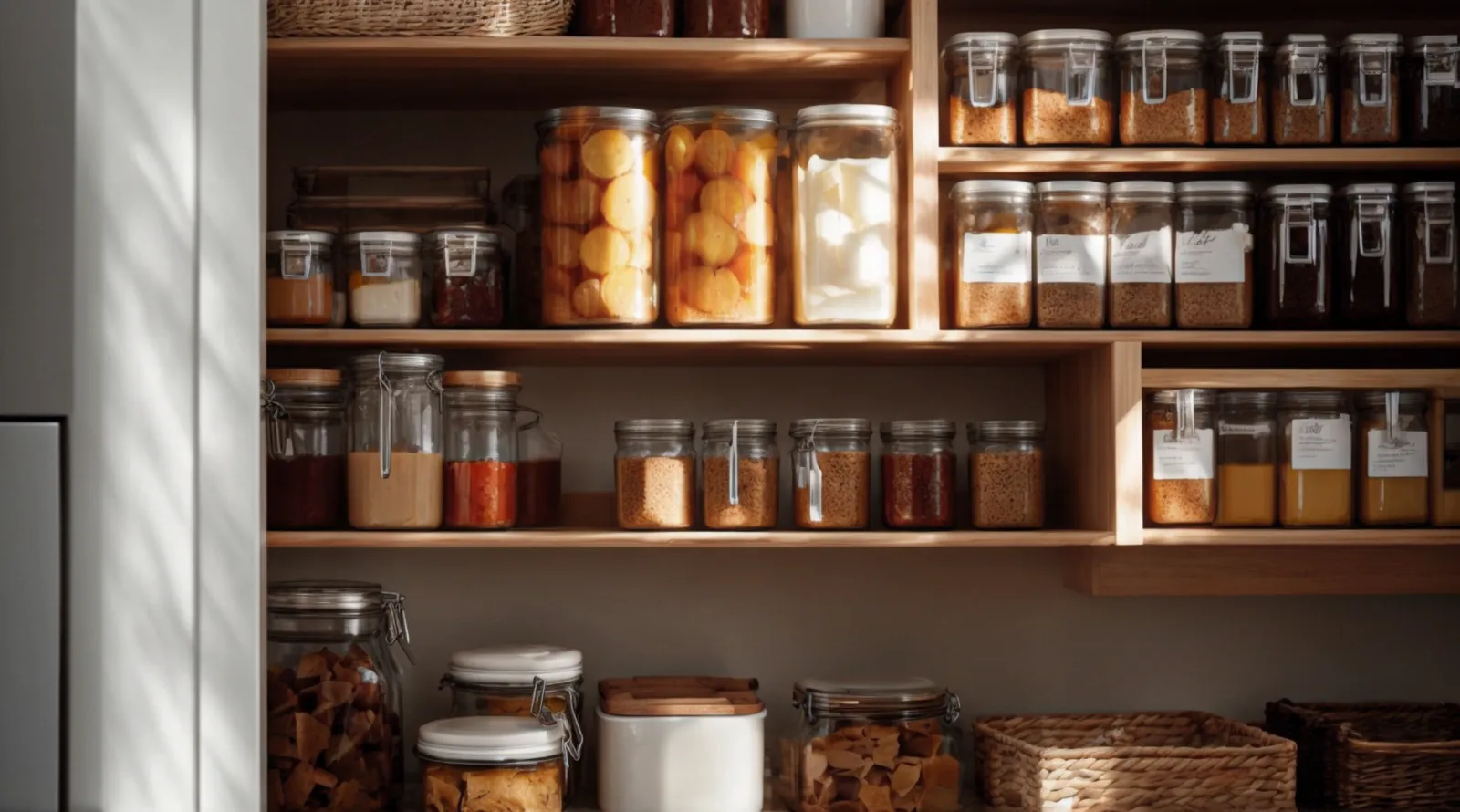
Glass jars are beautiful, but they are a tool rather than a goal. We decant what is bought in quantity, used often, and vulnerable to air and pests: flour, sugar, rice, oats, pasta, dried beans. In a sealed jar they stay fresh longer, stack cleanly, and show at a glance when you are running low, which matters in the weeks before a big meal. What we do not decant is nearly as important. A box of crackers that will be gone by Friday or a bag of chips with a clip on it is not worth the extra step, and a pantry full of jars nobody refills is only clutter with better lighting.
Labels keep the system honest. Write the contents and, for baking staples, the date you opened them, in a style simple enough that anyone in the family can replace one. The goal is that your partner or teenager can find the baking soda without asking and put it back without thinking.

What Lives in the Kitchen and What Lives in Reserve
Not everything you own needs to live in the room where you cook. The kitchen pantry is for what you reach for this week, and the reserve, whether that is a shelf in the garage, a hall closet, or a cabinet in the laundry room, is for the backstock: the extra case of broth, the paper goods, the sugar you bought on sale. Keeping the two apart gives the working pantry its breathing room, and breathing room is what keeps it tidy through December.
There is one caveat worth naming. Sometimes we walk into a home and realize the problem is not the order but the room itself: a single narrow cabinet, shelves too deep to see the back of, no free wall for a rack. Organizing can stretch a small space a long way, but it cannot invent square footage. When a family is ready for that, we point them to our sister company for kitchen and bath remodeling, where a pantry that never had a chance finally gets one.
The Tuesday Night Test
Here is how we know a pantry is working, and it has nothing to do with the holidays. It is a Tuesday in October, everyone got home late, and dinner has to come together in whatever time is left. You open the door, the pasta and canned tomatoes are exactly where they were last week, and dinner is on the stove before anyone can suggest takeout. That ordinary evening is the real reward. Thanksgiving is simply the day the same system gets to show off.
If you would like a second set of hands before the season begins, or simply want to talk through your own pantry, come talk with us, and while you are there, ask for our free Non-Toxic Starter Kit guide. We do this work in our own homes every fall, and we would love to help with yours.