
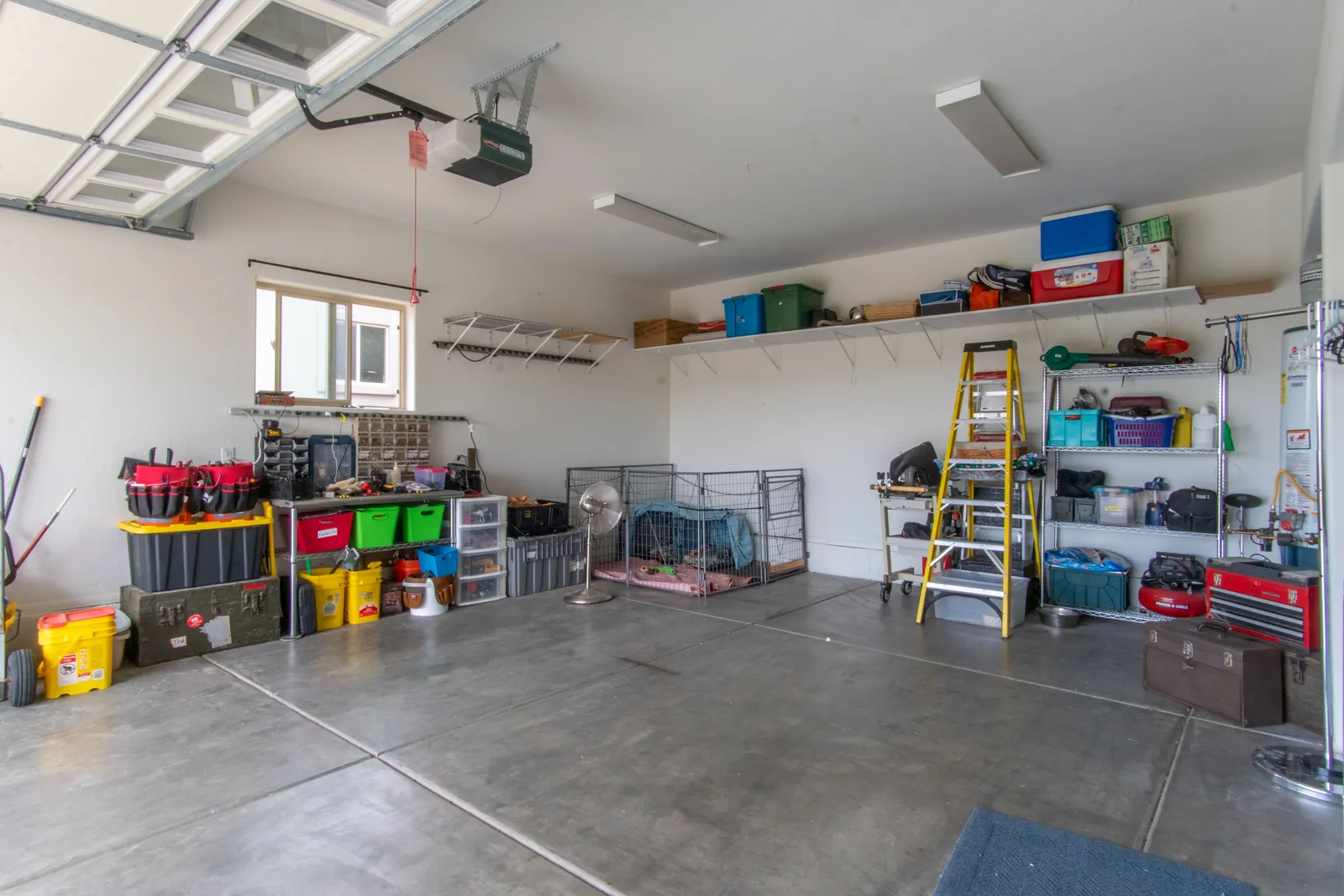
Reclaim the Garage Before the Cold Sets In, and Park the Car Again
The garage is the room that absorbs everything without a place. Here is how we reset it before the cold arrives, zone by zone, so the car fits inside again.
Every home has one room that quietly absorbs whatever does not have a place, and in most homes we work in, it is the garage. Pool floats land there in August, paint cans from the last project never quite leave, and somewhere behind the camping chairs sits the bin of holiday lights you will need in a few weeks. Early fall is the moment to face it, because Georgia afternoons are still mild enough to spend a few hours with the door up, and once the first real cold arrives nobody wants to sort screws with numb fingers. A garage reset before winter is one of our most satisfying projects, because it ends with a car parked inside where it belongs.
Take Everything Out, Even the Corners
We know it sounds dramatic, but the garage is the one space where a partial edit rarely works. Shuffling things from one wall to the other only moves the problem, so we pull everything onto the driveway, sort it into rough piles as it comes out, and sweep the floor before anything goes back. Seeing it all in daylight is clarifying in a way that peering into a dark corner never is. Three flat basketballs, two broken rakes, and the shelving unit you forgot you bought become easy decisions once they sit side by side in the sun. Keep what you use, donate what someone else could, and set every chemical, paint can, and mystery bottle in a pile of its own, because those deserve their own section.
Build Zones Around the Way Your Family Lives
Once the floor is clear, we walk the space with our clients and ask what really happens in this garage. The answers shape the zones: garden tools and potting soil near the side door, sports equipment where the kids can reach it without climbing over anything, a workbench or tool wall where the light is best, seasonal decor gathered in one place, and a small pantry overflow shelf for the paper towels and cases of water that never fit inside. Each zone claims its own stretch of wall, so putting something away means walking to one spot instead of hunting for a gap. It is the same logic we bring to a closet or a pantry, and it works because it follows the family's movements rather than fighting them.
Fall is also when the seasonal zone earns its keep. The beach towels, the sprinkler, and the patio cushions can move up high or toward the back, and the holiday bins slide forward to eye level, so that in December you are not on a stepladder with a flashlight searching for the wreath. A little rotation now saves a frustrating evening later and keeps the summer things clean and dry until you need them again.
Go Vertical, and Let the Bins Be Clear
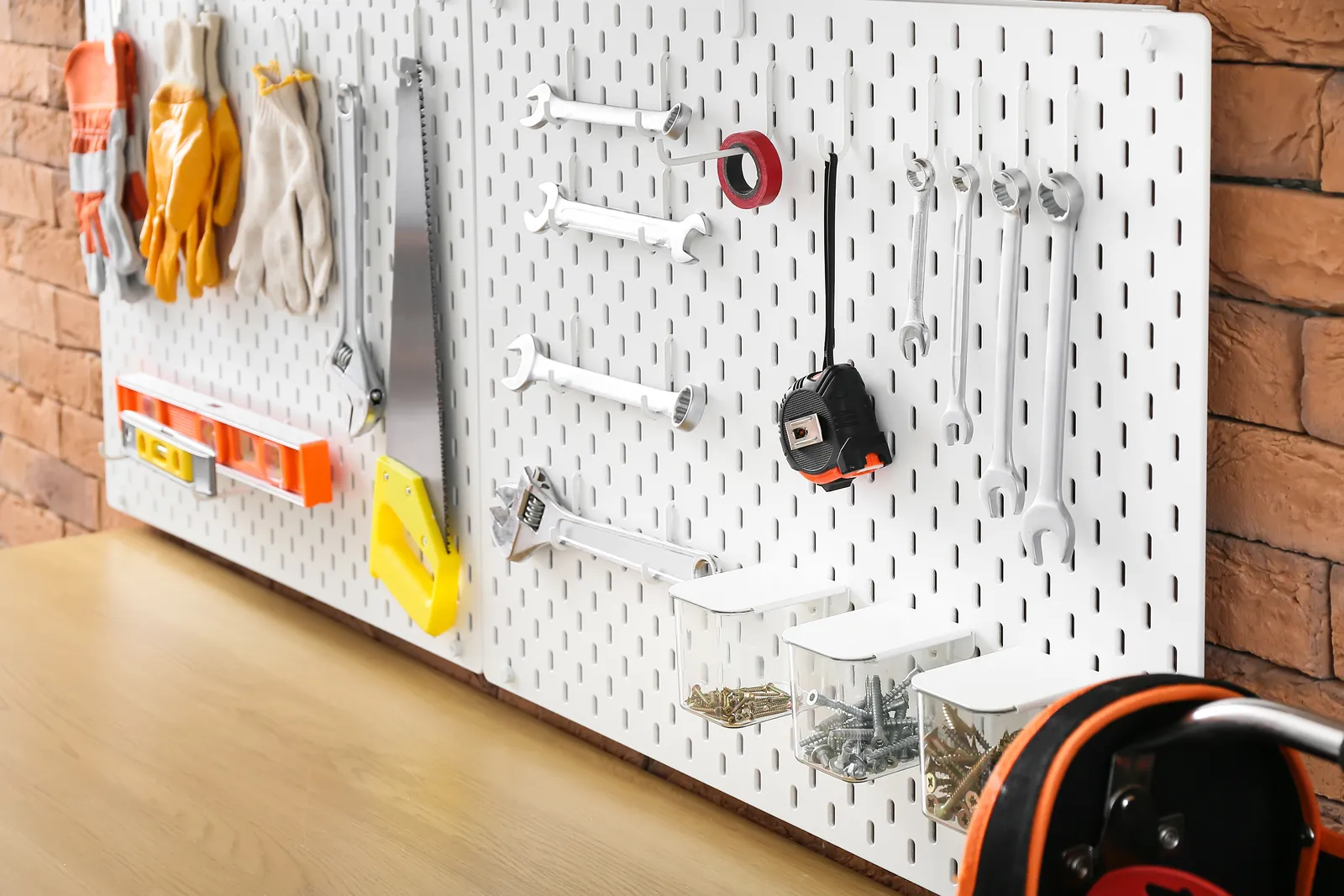
Floor space in a garage is precious, so we treat the walls and the air above the car as the real storage. Sturdy shelving, a pegboard or track system for tools, and hooks for bikes, ladders, and hoses lift the clutter off the ground and make the whole room easier to sweep. For anything that lives in a bin, we choose clear containers and label the side that faces out, so a box of extension cords is recognizable from the doorway. Heavy items sit low, rarely used items go high, and nothing is stacked so deep that reaching the back means unloading the front. The tool wall our clients admire most earns that admiration because everyone in the family knows where the pruners are the moment they need them.
The Safety Check We Never Skip
That pile of chemicals we set aside earlier is the part of the reset we care about most, because a garage collects the products a family would never keep in the kitchen: lawn fertilizer and weed killer, half-full cans of paint, solvents, pool chemicals, pesticides, and automotive fluids. We go through them one at a time. Anything you still use goes back into a closed cabinet or onto a high shelf, in its original container with the label readable, well away from where children play and pets nose around, and never beside the pantry overflow or the dog food. If you have little ones or animals at home, our post on cleaning with kids and pets explains how they shape our thinking.
Anything old, rusted, leaking, or long forgotten leaves the house, though not in the regular trash. Many counties run household hazardous waste collection programs or drop-off events for exactly these items, and a quick look at your county's website will tell you what they accept and when. It takes a few extra minutes, and it is one of the simplest ways to keep the air and the ground around your home a little cleaner, the same thinking behind our wellness cleaning indoors. None of this calls for alarm; these products are perfectly manageable once they are sorted, sealed, and stored with intention.
The Goal Is the Car
When we ask clients how they will know the project worked, the honest answer is almost always the same: the car fits again. Pulling into a dry, uncluttered garage on a cold morning and walking straight into the house is a small daily comfort that costs nothing once the space works. An organized garage is also safer to move through, easier to keep clean, and far less likely to become the place where things go to be forgotten. It is a project we love guiding families through as part of our process, and if you would rather not face it alone, come talk with us and ask for our free Non-Toxic Starter Kit while you are there. Clear spaces, calm minds, intentional living: sometimes it starts with the garage door going up.